

Last updated: 10 October 2026. Airline terminal assignments can change between seasons, so always confirm on your booking.
The two Barcelona airport terminals, T1 and T2, are far enough apart that turning up at the wrong one can cost you half an hour, and occasionally a flight. They sit on opposite sides of the runways at Barcelona–El Prat, with no walkway between them. This guide explains which airlines use which terminal, how to move between them, what each building offers and how much time to allow, so you arrive at the right door the first time.
El Prat handled a record 57.5 million passengers in 2025, according to the airport operator Aena, which makes it the second-busiest airport in Spain after Madrid. Almost all of that traffic passes through the two Barcelona airport terminals, which are very different buildings: a large modern terminal used by full-service and long-haul airlines, and an older, more compact one used mainly by low-cost carriers.
Barcelona airport terminals at a glance: T1 vs T2
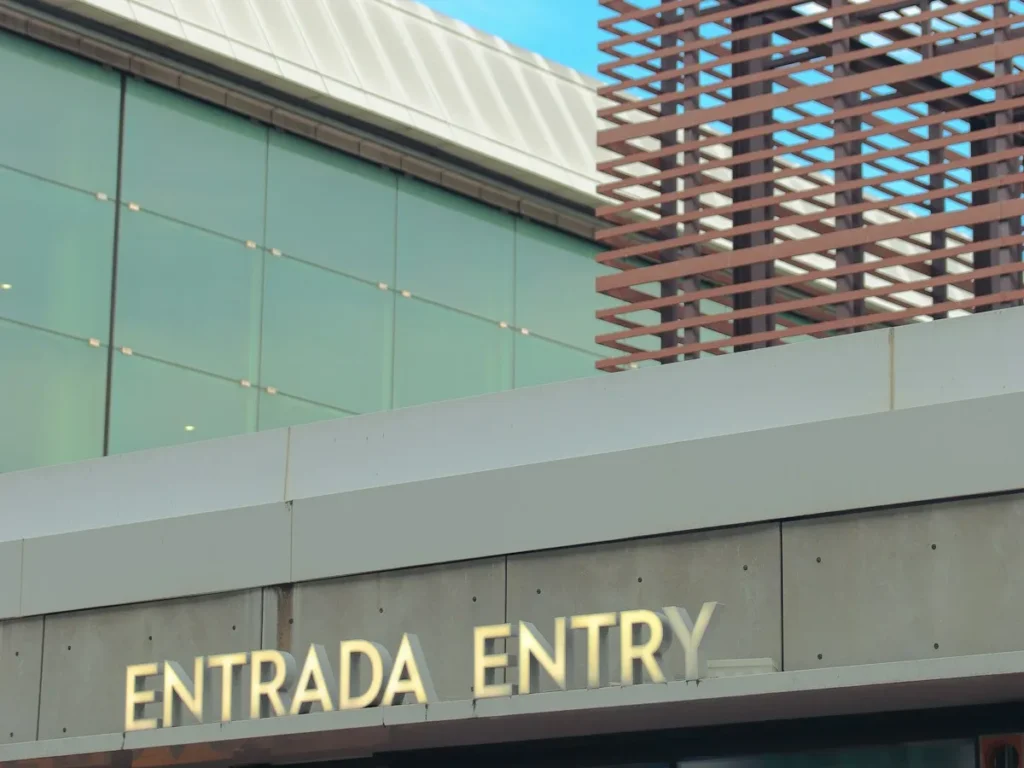
| Terminal 1 (T1) | Terminal 2 (T2) | |
|---|---|---|
| Main airlines | Vueling, Iberia, British Airways, Lufthansa, KLM, Emirates, Qatar Airways, US airlines | Ryanair, easyJet, Jet2, Wizz Air, Transavia |
| Opened | 2009 | 1968, extended for the 1992 Olympics |
| Layout | One building, boarding areas A to E | Three linked halls: T2A, T2B, T2C |
| Lounges | Several, including Sala VIP Pau Casals and Joan Miró | One: Sala VIP Canudas (T2B) |
| Train station | No (free shuttle to T2) | Yes, R2 Nord next to T2B |
| Metro L9 Sud | Yes | Yes |
| Feel | Spacious, more shops and restaurants | Simpler, quicker to cross |
Which airlines use each of the Barcelona airport terminals?
As a rule of thumb, full-service, alliance and long-haul airlines use T1, while most low-cost airlines use T2. The main exception is Vueling, the largest airline at Barcelona, which flies from T1 even though it is a low-cost carrier.
Terminal 1 handles Vueling, Iberia and Iberia Express, Air Europa, British Airways, Aer Lingus, Lufthansa, Swiss, KLM, Air France, TAP, American Airlines, Delta, United, Emirates, Qatar Airways, Turkish Airlines and most other Oneworld, Star Alliance and SkyTeam members.
Terminal 2 handles Ryanair, easyJet, Jet2, Wizz Air, Transavia and many seasonal charter flights. Within T2, check-in for most airlines is in T2B, while some easyJet flights board from gates in T2C.
Assignments occasionally move between the summer and winter seasons, and codeshare flights depart from the terminal of the airline that operates the aircraft, not the one that sold you the ticket. If your booking says “operated by”, that airline is the one to follow.
How to check your terminal
- Your booking confirmation or boarding pass. Most airlines print the terminal next to the departure time.
- The airline app. It is usually the most up to date, especially on the day of travel.
- Aena’s flight search. The official airport website lists every arrival and departure with its terminal.
- Signs on the motorway. If you are driving, the road splits for T1 and T2 well before the airport, so know your terminal before you set off.
Getting between T1 and T2
You cannot walk between the two Barcelona airport terminals. The distance by road is about 4 km, and the runways sit in the way. You have three options.
The free shuttle bus is the standard choice. The green buses run 24 hours a day: every 5 minutes from 08:00 to 20:00, every 7 minutes in the early morning and evening, and every 10 minutes overnight. The ride takes about 10 minutes from T1 to T2 and about 14 minutes in the other direction. At T1 the stop is outside the arrivals level and on the departures level (except overnight, when only the arrivals stop is served); at T2 it stops outside T2B and at T2C. No ticket is needed.
A taxi is faster when traffic is light but rarely worth it. Trips that start at the airport carry a minimum fare of €21, so expect to pay at least that for a few kilometres.
Metro L9 Sud stops at both terminals, but you need a dedicated airport ticket, so the shuttle is cheaper and usually quicker.
Allow 20–30 minutes for the whole change, including waiting at the stop and finding the right check-in area. If you are carrying a lot of luggage, use the trolleys; they fit on the shuttle buses.
Terminal 1 in detail
T1 opened in 2009 and was designed by the Catalan architect Ricardo Bofill. It is one long, light building with check-in on the departures level and five boarding areas lettered A to E. Some areas serve Schengen flights (no passport control, for example to France, Germany or Italy) and others serve non-Schengen flights such as the UK, the US and the Middle East, which pass through passport control.
- Food and shopping: the widest choice at the airport, with a large duty-free walkway after security, Spanish fashion brands and sit-down restaurants.
- Lounges: Sala VIP Pau Casals (Schengen), Sala VIP Joan Miró (non-Schengen) and Sala VIP Colomer (mainly for the Madrid shuttle), plus airline lounges. Most Aena lounges sell day passes, from about €48.
- Walking distances: moving between boarding areas can take 10–15 minutes, so do not linger too long in the shops if your gate is in D or E.
- Security: queues peak in the early morning and early evening, especially in summer. Fast-track lanes are available for some tickets and can be bought separately.
Terminal 2 in detail
T2 is the original terminal. Its central hall, T2B, dates from 1968, and the two side halls, T2A and T2C, were added for the 1992 Olympic Games. It feels older and simpler than T1, but it is compact: T2A and T2B are about two minutes apart on foot, and T2C about five minutes from T2B.
- Check-in: most airlines use T2B; follow the screens for your desk number.
- Food and shopping: fewer options than T1, especially in T2A and T2C. Eat in T2B before you head to a far gate.
- Lounge: one Aena lounge, Sala VIP Canudas, in T2B.
- Train: the R2 Nord station is next to T2B, which makes T2 the better-connected terminal by rail.
- Busy times: summer Saturdays, when charter flights add to the low-cost schedule, are the most crowded.
Arriving: where to meet your driver or family
Both Barcelona airport terminals have a public arrivals area where people wait behind a barrier. At T1 it is on the lower level; at T2, most passengers come out in T2B. If someone is collecting you, tell them your terminal and flight number rather than just the time; flights can switch arrival halls at T2, and the screens in the hall show which exit each flight will use.
Licensed taxis wait at signposted ranks outside each arrivals hall, and the Aerobús has separate stops at each terminal: line A1 for T1 and line A2 for T2. Pre-booked drivers wait inside the hall with a name sign, which saves looking for a rank with tired children or heavy cases. If you would like one waiting for you, see our Barcelona airport transfer service.
Departing: how early to arrive
- Flights within the Schengen area: aim to be at the terminal two hours before departure.
- Flights to the UK, the US and other non-Schengen destinations: allow three hours, because of passport control.
- Summer, Easter and long weekends: add 30 minutes to both.
- Checking a bag with a low-cost airline: bag-drop desks close 40–60 minutes before departure, depending on the airline.
Non-EU visitors, including British and American travellers, are registered in the EU’s Entry/Exit System (EES) the first time they cross the Schengen border. Registration means fingerprints and a photo at passport control on arrival, so the first entry can take longer. On later trips the check is quicker.
Assistance for reduced mobility
Aena runs a free assistance service, known as PMR, in both Barcelona airport terminals for anyone who has difficulty walking long distances, climbing stairs or managing on their own, including older travellers. Staff can meet you at the aircraft door or at a signposted call point in the terminal, take you through security and passport control, and help you to your gate or to the arrivals hall. Request it through your airline at least 48 hours before you fly; it is free, and you do not need to be a wheelchair user to ask for it. Wheelchairs are available, and both terminals have accessible toilets and lifts to every level.
Connecting between terminals on separate tickets
If you have booked two separate flights, for example a Ryanair arrival at T2 and a British Airways departure from T1, you are responsible for the connection. You will need to collect your bags, take the shuttle, check in again and pass security. Allow at least three hours between landing and the next departure; two hours is possible only with hand luggage and no passport control. A missed connection on separate tickets is not covered by the airline.
Getting to the city from each terminal
Both Barcelona airport terminals have the Aerobús, metro L9 Sud, city buses and taxi ranks. T2 has the added advantage of the R2 Nord train, the quickest public route to Passeig de Gràcia. For prices, timetables and a full comparison, read our guide to getting from Barcelona airport to city centre.
What is changing at El Prat
In 2025 the Spanish government and Aena agreed a €3.2 billion expansion plan for the airport. It includes a new satellite terminal linked to T1, the renovation of both existing Barcelona airport terminals and a 500-metre extension of the sea-facing runway so that it can handle more long-haul flights. According to the published timetable, construction is expected to begin around 2030 and finish in 2033, so for the next few years the two-terminal layout described here will stay the same.
Frequently asked questions
Is Ryanair at Terminal 1 or Terminal 2 in Barcelona?
Ryanair uses Terminal 2. Check-in is in T2B.
Which terminal does Vueling use?
Vueling flies from Terminal 1, along with Iberia, British Airways and most other full-service airlines.
Can you walk between T1 and T2 at Barcelona airport?
No. The terminals are about 4 km apart by road. Use the free 24-hour shuttle bus, which takes 10–14 minutes.
Which of the Barcelona airport terminals has the train station?
Terminal 2. The R2 Nord station is next to T2B. From T1, take the free shuttle bus to T2 first.
Which terminal is easyJet at Barcelona?
easyJet uses Terminal 2. Most check-in is in T2B, and some flights board from gates in T2C.
Official sources
For live terminal information and flight status, use Aena’s Barcelona–El Prat website. Passenger figures are from Aena’s 2025 traffic report, and expansion details from the plan announced by Aena in June 2025.
Landing in Barcelona soon?
Send us your flight number on WhatsApp. Your driver will meet you inside the right arrivals hall, at a fixed price per vehicle, with nothing to pay in advance.